
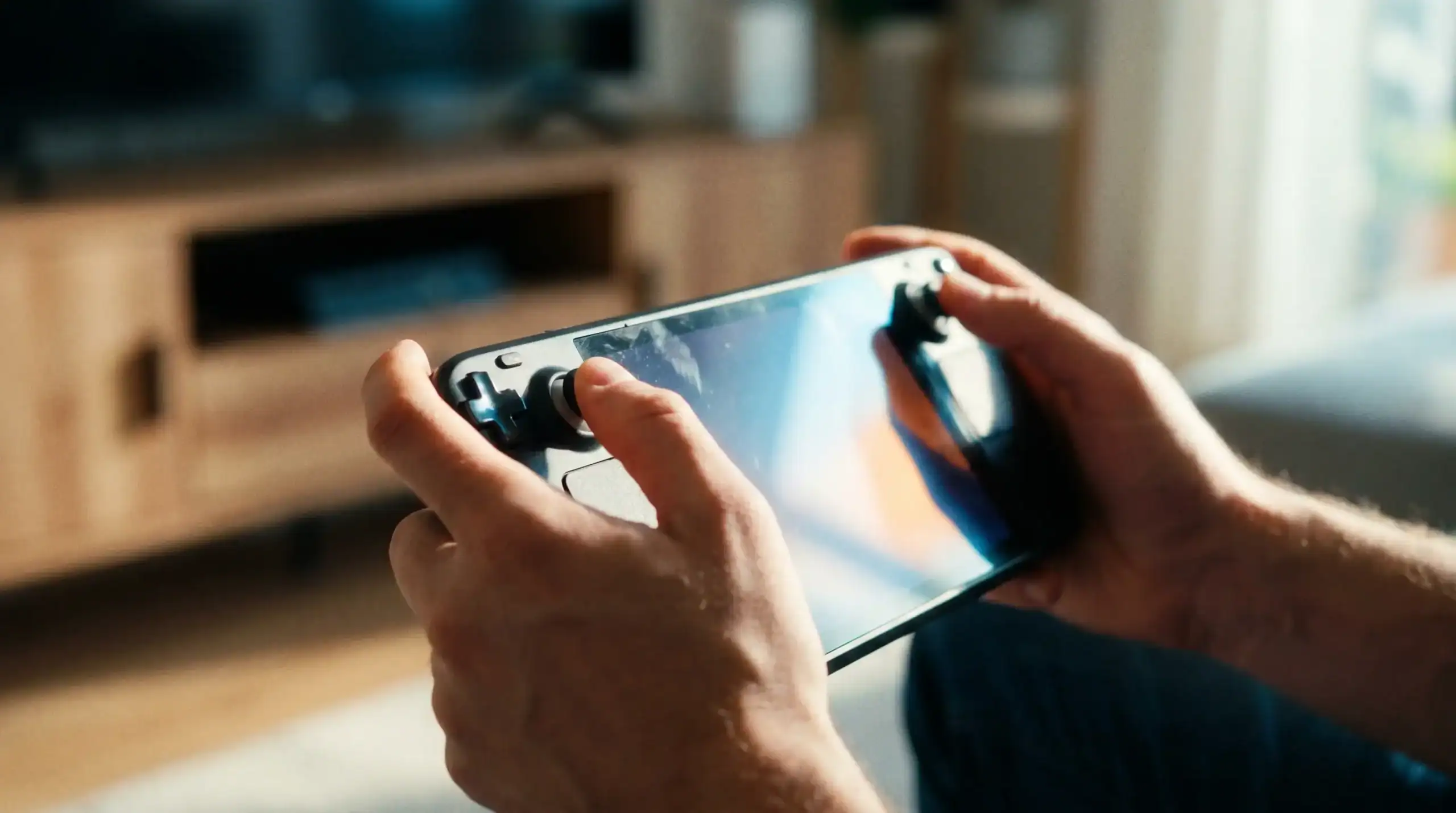
Retroid Pocket 5 Review 2026
The Retroid Pocket 5 launched in 2024 and immediately became the benchmark for Android emulation handhelds. A 5.5-inch AMOLED display, Snapdragon 865 chipset, and a price tag around $149-$179, it delivers more emulation performance per dollar than anything else in its class.
Here’s the full breakdown of whether it’s still worth buying in 2026, especially now that the Retroid Pocket 6 is available.
Retroid Pocket 5 Specs
| Spec | Retroid Pocket 5 |
|---|---|
| Display | 5.5-inch AMOLED, 1080p, 60Hz |
| Processor | Snapdragon 865 |
| RAM | 8GB LPDDR5 |
| Storage | 128GB UFS 3.1 (microSD expandable) |
| OS | Android 13 |
| Battery | 5000mAh |
| Weight | ~300g |
| Price | ~$149-$179 |
Display: AMOLED at This Price Is Rare
The 5.5-inch AMOLED panel is what separates the RP5 from most competitors at this price. AMOLED means true blacks, saturated colours, and no backlight bleed, the same panel tech that justifies the Steam Deck OLED’s premium. On retro games, the contrast is stunning. Pixel art looks sharp. SNES and GBA games look better on this screen than they ever did on original hardware.
At 60Hz the display is standard rather than exceptional, the Retroid Pocket 6 bumps this to 120Hz, which is noticeable in fast-paced games. But for the emulation use cases the RP5 was designed for, 60Hz is more than adequate.
Performance: What Can It Actually Emulate?
The Snapdragon 865 is a 2020 flagship phone chip that Retroid built a handheld around. Here’s what runs well:
- NES, SNES, GBA, GBC: Perfect, no configuration needed
- Nintendo DS: Full speed on all games
- PSP: Full speed on virtually every game
- N64: Full speed on most games, occasional hiccups in demanding titles
- Dreamcast: Full speed on most games
- PS1: Perfect
- PS2: Majority of library runs well at native resolution; demanding titles need resolution or speed hacks
- GameCube / Wii: Light to mid titles run well; demanding Wii and GameCube games can stutter
- PS3: Too demanding, largely unplayable
- Nintendo Switch: Not supported, Switch emulation requires PC-class hardware
The RP5’s sweet spot is everything through 6th-gen consoles (PS2 era) with reliable GameCube/Wii as a bonus. For 7th-gen and beyond, you need the Steam Deck or a Windows handheld.
Android Native Gaming
The RP5 runs Android 13, which means it also plays native Android games. Genshin Impact runs at medium-high settings. Diablo Immortal plays well. Most mobile games work smoothly with the physical controls, though Android gaming on a handheld always has the occasional compatibility hiccup.
You can also stream via Xbox Game Pass cloud gaming, NVIDIA GeForce Now, or Steam Link, turning the RP5 into a cloud gaming handheld when you’re on Wi-Fi.
Battery Life: Solid for Its Class
The 5000mAh battery delivers 4-6 hours of emulation depending on the system and brightness settings. Running older systems like SNES or GBA, you’ll push toward 6 hours. Demanding GameCube emulation will land closer to 4. It charges via USB-C and supports fast charging.
Compared to the Steam Deck (2-7 hours depending on game) and the ROG Ally X (2-4 hours), the RP5 holds its own for lighter workloads. It’s not going to outlast a 3DS but it’s comfortable for a long session.
Build Quality and Controls
The RP5 uses a horizontal layout with thumbsticks above the face buttons, a PlayStation-style layout rather than Nintendo’s offset arrangement. The buttons have good travel and feel responsive. The thumbsticks are accurate for emulation, though they’re not going to replace a DualSense for precision gaming.
Shoulder buttons and triggers feel solid. The overall build is plastic but sturdy, Retroid’s build quality improved significantly from the RP3 to the RP5 generation. It doesn’t feel cheap.
RP5 vs Steam Deck OLED
| Retroid Pocket 5 | Steam Deck OLED | |
|---|---|---|
| Price | ~$149-$179 | $549 |
| Display | 5.5″ AMOLED 60Hz | 7.4″ OLED 90Hz |
| Emulation (up to) | GameCube / Wii | PS3 / Switch |
| PC gaming | ❌ No | ✅ Full library |
| Portability | Compact (300g) | Larger (640g) |
| Battery | 5000mAh / ~5hrs | 50Wh / 2-7hrs |
These devices don’t really compete, they serve different needs. The RP5 is a dedicated emulation machine that fits in a jacket pocket. The Steam Deck is a PC gaming handheld that also emulates. If retro gaming is your primary goal and budget matters, the RP5 wins at a third of the price. If you want access to modern PC games alongside emulation, the Steam Deck is the right choice.
RP5 vs Retroid Pocket 6
The Retroid Pocket 6 launched in early 2026 with a Snapdragon 8 Gen 2, 120Hz AMOLED display, and a starting price around $219. It’s meaningfully more powerful than the RP5, better GameCube/Wii emulation, partial PS3 support, and the smoother 120Hz display.
If you’re buying new today, the RP6 is worth the extra $50-$70 for the performance headroom. If the RP5 is available at a discount ($130 or under), it’s still excellent value for anyone whose emulation needs stop at PS2 and GameCube.
Who Should Buy the Retroid Pocket 5
Buy it if:
- Retro emulation is your primary use case (up to PS2/GameCube era)
- Budget is under $200 and you want AMOLED quality
- You want something more compact than the Steam Deck
- You find the RP5 on sale at a significant discount vs. the RP6
Skip it if:
- You want PS3 or Switch emulation (get the RP6 or Steam Deck instead)
- You want 120Hz display (RP6 has it, RP5 doesn’t)
- You play modern PC or Steam games (Steam Deck is the right tool)
Where to Buy
Also check out:
Bottom Line
The Retroid Pocket 5 remains one of the best emulation handhelds ever made at its price point. AMOLED display, solid Snapdragon 865 performance through PS2/GameCube, and 5+ hours of battery life for under $180, that’s a strong package.
In 2026, the Retroid Pocket 6 is the better buy at its current price. But if you find the RP5 at a discount, or you specifically want to spend under $150, it still delivers.
👉 Check the Retroid Pocket 5 on Amazon
One Comment