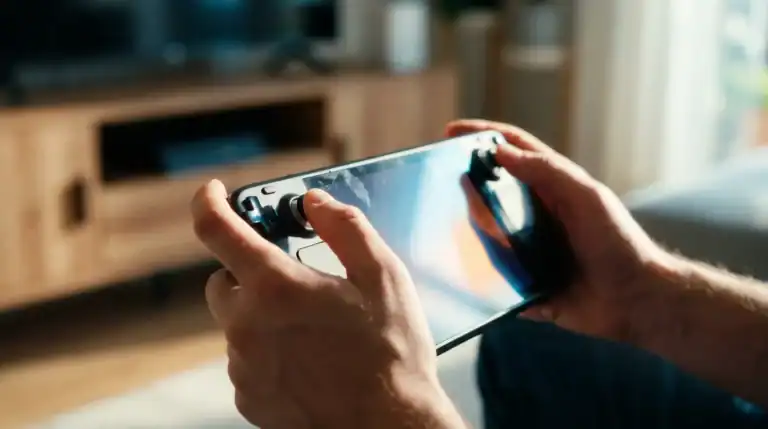
Retroid Pocket 6’s 12GB Model Is Back, But It Costs You Storage (2026)
Retroid just brought the 12GB RAM version of the Pocket 6 back from the dead. The company killed it in March 2026 because memory prices spiked too fast to keep the price steady. Now it’s back at $279, but you’re getting half the storage you used to get. If you’ve been waiting to buy a Retroid Pocket 6, this changes what you should actually order.
What Changed: 12GB RAM Returns, Storage Drops to 128GB
When the Retroid Pocket 6 launched, the 12GB RAM model came paired with 256GB of UFS 4.0 storage. That combo got discontinued in March because RAM and flash storage costs jumped industry-wide. Retroid raised the price of the remaining 8GB model instead of eating the cost.
The 12GB model is back now, but it ships with only 128GB of storage, and it uses slower UFS 3.1 instead of UFS 4.0. The price stayed at $279, the same number the old 12GB/256GB version sold for. You get more RAM for multitasking and heavier emulation, but less room for games and a slower read speed for loading them.
There’s also a configuration limit. The 12GB model only comes in the “top stick” layout, meaning the left analog stick sits above the d-pad. If you wanted the stick on the bottom, you’re stuck with the 8GB version. Color choices are limited to black, silver, and 16-bit.
Retroid announced the change quietly through Discord rather than a press release, which is typical for the company. It’s a smaller operation than Valve or ASUS, and most of its product updates get posted directly to its community channels before any tech outlet picks them up. If you want to catch these changes early, the Retroid Discord server is faster than waiting on news coverage.
Why This Happened: The Memory Shortage Hitting Every Handheld
This isn’t a Retroid-only problem. AI data centers are buying up NAND flash and RAM at a pace memory manufacturers can’t match, and consumer electronics are losing out. Industry insiders have started calling it “RAMageddon.” Memory makers earn more selling chips to server farms than to handheld manufacturers, so consumer devices get pushed to the back of the line. It’s the same root cause behind the Steam Deck OLED jumping from $549 to $789 this year and the Legion Go 2 climbing past $1,300.
Small companies like Retroid feel this faster than giants like Valve or Lenovo. Retroid doesn’t have the order volume to lock in long-term memory contracts at stable prices, so when spot prices spike, the company has to react within weeks instead of months. That’s why the 12GB model disappeared entirely in March rather than just getting a price bump like the 8GB model did.
Retroid’s move is a workaround, not a fix. Cutting storage in half lets the company hold the RAM upgrade at the old price instead of passing on the full cost increase. Expect more handheld makers to make similar trade-offs through the rest of 2026 rather than raise prices outright. Some will cut storage. Some will swap to slower memory tiers. Few will eat the cost themselves.
Full Retroid Pocket 6 Specs
The chip and screen didn’t change between configurations. Only the memory did.
| Spec | 8GB Model | 12GB Model (New) |
|---|---|---|
| Price | $259 | $279 |
| RAM | 8GB LPDDR5x | 12GB LPDDR5x |
| Storage | 128GB UFS 3.1 | 128GB UFS 3.1 |
| Chip | Snapdragon 8 Gen 2 | Snapdragon 8 Gen 2 |
| Display | 5.5″ AMOLED, 1920×1080, 120Hz | 5.5″ AMOLED, 1920×1080, 120Hz |
| Battery | 6,000mAh, 27W charging | 6,000mAh, 27W charging |
| Stick layout | Top or bottom stick | Top stick only |
Both models run the Snapdragon 8 Gen 2 with an Adreno 740 GPU, Wi-Fi 7, Bluetooth 5.3, Hall-effect sticks, and active cooling. The display and battery are identical across both configurations. The only real differences now are RAM, storage speed tier, and stick placement options.
Should You Buy the 12GB Model or Stick With 8GB?
If you’re emulating up through PS2, GameCube, and light Switch titles, 8GB is still enough. The extra 4GB on the 12GB model mostly helps with heavier emulators, RPCS3, and running multiple emulators with save states and shaders loaded at once. If you stick to PS1, N64, Dreamcast, and 2D-era systems, you won’t notice the difference.
128GB fills up fast once you start loading PS2 or GameCube ROMs, which run much larger than older systems. Both models support microSD expansion, so this isn’t a dealbreaker, but budget for a card on top of the device price. A 256GB or 512GB microSD card adds $20 to $40 depending on the brand and speed class.
For most buyers, the 8GB model at $259 is the smarter pick right now. You save $20, get the same screen and battery, and can add storage cheaply via microSD. Get the 12GB model only if you specifically run heavier emulators or multitask between apps while gaming, and only if you’re fine with the top-stick layout.
One more thing worth weighing: resale and longevity. If you plan to keep this device for several years and grow into heavier emulation as new cores improve, the extra RAM ages better. Android updates and emulator builds tend to creep up in memory use over time. Buying the 8GB model to save $20 today could mean hitting a performance wall sooner than buying the 12GB model and growing into it.
How This Fits Into 2026’s Bigger Price Story
Every handheld maker is dealing with the same memory squeeze this year. The Steam Deck OLED price jump, the Legion Go 2’s climb past $1,300, and now the Retroid Pocket 6’s storage cut are all the same story told three different ways. If you’re shopping for any handheld in 2026, treat current pricing as the floor, not a temporary spike. Waiting for prices to drop back to early-2026 levels isn’t a realistic plan based on how this shortage is playing out.
Analysts tracking the memory market expect prices to stay elevated through at least early 2027, as data center demand isn’t slowing down. Handheld makers will keep absorbing the cost through some combination of higher prices, reduced specs, or longer wait times between restocks. Budget accordingly if you’re planning a purchase later this year.
If you want a budget emulation handheld and don’t need the absolute latest hardware, picking up a Retroid Pocket 5 or checking our best emulation handhelds under $50 picks at current pricing still beats waiting. Memory costs aren’t trending down this year.
Check Retroid Pocket 6 pricing and availability on Amazon
Retroid Pocket 6 12GB: Quick Questions
Is the 12GB Retroid Pocket 6 worth the extra $20 over the 8GB model?
Only if you run heavier emulators or keep several apps open at once. For PS1 through Dreamcast era emulation, 8GB handles everything without slowdown.
Can I add storage with a microSD card?
Yes. Both the 8GB and 12GB models keep the microSD slot, so 128GB onboard isn’t a hard ceiling. A 512GB card runs about $35 to $40 and effectively erases the storage gap with the old 256GB model.
Will Retroid bring back the 256GB option later?
Nothing confirmed yet. Given how memory pricing has moved all year, don’t plan a purchase around it coming back at the same price.
Does the slower UFS 3.1 storage affect game loading?
Slightly. Load times on PS2 and GameCube titles will be a touch longer than on the original UFS 4.0 unit, but it’s not a dealbreaker for handheld emulation. You won’t notice it on PS1, N64, or older systems.
The bottom line: more RAM now means less storage at the same price. That’s the trade every handheld buyer needs to start expecting through the rest of 2026.